Genius Weft 101: Cuticle-Aligned One-Donor Hair Extensions Explained for Salons
Salon owners rarely buy a weft because of the fibre alone. They buy it for what the guest says six weeks later — whether the hair still moves freely, whether the attachment area still feels comfortable, and whether that guest is booking a refit or a repair.
That is why the useful way to understand a genius weft hair extension is not as a premium upgrade, but as a construction decision. Donor count, cuticle direction and base thickness are fixed at the factory. Everything the salon experiences later — styling time, maintenance frequency, replacement cycle, and eventually the price of owning the hair over two years — follows from those three variables.
This 101 explainer is written for salon owners, extension specialists and buyers sourcing on behalf of a salon. It defines the category, explains why donor count and cuticle direction matter, walks through a step-by-step evaluation checklist, shows where one-donor wefts fit in real salon work, and compares them directly with remy hair collected from multiple donors.
Problem Definition: Why Mixed-Donor Wefts Cost Salons Time
When a weft is assembled from hair collected from several donors, the strip carries more than one texture, more than one strand diameter and — most importantly — cuticles that do not all lie in the same direction.
That matters because an intact cuticle behaves like a roof tile. Lying one way it is smooth and reflective; pushed the other way its edges catch. Inside a weft where directions are mixed, each strand constantly rubs against its neighbours. A stylist reads that friction as roughness, dryness and dullness. A guest reads it as "these extensions are hard work".
The symptoms arrive in a predictable order:
- Detangling time increases at every wash appointment.
- Matting builds up around the attachment points rather than in the ends.
- Shine fades earlier because the cuticle surface has been roughened by friction.
- The replacement cycle shortens, and refit appointments creep closer together.
For a salon, this is a scheduling problem before it is a product problem. Chair time spent detangling and refitting cannot be sold, and guests who find their extensions difficult to live with rarely re-book.
Cuticle-aligned, one-donor construction addresses the cause rather than the symptom. One donor means one natural texture, one wave pattern and one colour base. Cuticle alignment means every strand faces the same way, so the hair moves as a unit instead of fighting itself. The base is thin enough to sit flat against the scalp, and the weft is cut to size instead of being bonded into place.
Industry Background: Where Genius Wefts Sit in the Weft Market
Genius wefts are a specification-led category. Suppliers differentiate on donor model, cuticle handling, base thickness and material claims rather than on branding alone, and salon buyers are increasingly evaluating those specifications the way they would evaluate a colour line or a tool investment.
The surrounding market is substantial. Grand View Research valued the global hair wigs and extensions market at USD 15.2 billion in 2025. Within it, the medical wig segment was valued at USD 1.8 billion in 2025 and is projected to reach USD 3.2 billion by 2034, according to Dataintelo — a reminder that a meaningful share of salon demand comes from guests with hair loss or thinning hair, not only from guests seeking volume or length.
The Weft Spectrum in Plain Terms
Genius wefts are best understood as a hybrid, and they are usually described in the 0.5–1.0 mm range at the base. On one side of them sits the hand-tied weft: the most natural drape of the three, but also the most fragile. On the other side sits the machine weft: durable, but bulky at the attachment line. The genius weft takes the thin, flexible base of the first and borrows durability from the second — which is exactly why salons that install a high volume of extensions have moved toward it.
Two structural details separate it from both neighbours. Genius wefts are cuttable anywhere along the strip without unraveling, and they are built without the folded-over "return hair" that adds bulk where the weft meets the scalp. Less bulk at the attachment line means the weft can sit closer to the head and remain comfortable under the guest's own hair.
Who Supplies the Category
The supply side is concentrated around wholesale and salon-facing channels rather than mass retail. Haneway states that it supplies genius weft hair extensions for brands, salons and distributors. Ouxun Hair positions itself as a direct factory wholesale genius weft supplier. Newtimes Hair states that its genius weft extensions are made of 100% cuticle-aligned Remy human hair and targets salons and wholesalers. CYhair claims to be a pioneering manufacturer of 1 mm genius weft hair extensions in Vietnam, and Helene Hair describes itself as a direct-to-business human hair factory offering machine and hand-tied wefts. In the adjacent kosher wig category, LEV Wigs describes itself as serving more than 200 professional boutiques, salons and healthcare providers across 40 or more countries.
These positions are published by the suppliers themselves. They are useful for mapping the category and identifying who is competing on specification, but they are supplier statements rather than independently audited data — a distinction worth keeping in mind when comparing quotes.
Dolas Dream Hair Co., Ltd is a Qingdao-based manufacturer and exporter established in 2015, specialising in genius weft hair extensions and human hair toppers, with a 1,500 m² manufacturing facility, an annual output of about 115,000 units, a 15-engineer development team and an export ratio of 90%, mainly to the USA and EU. The company's own published workflow is a useful reference point for this guide: raw material is sourced as A-grade, production is split into procurement, production, quality control, packaging and warehouse sections, and every single item is checked by quality controllers before packing.
Detailed Solution: How a Genius Weft Is Built
Four construction choices decide whether a weft behaves like a genius weft or simply carries the name. Dolas Dream describes its genius weft as using an ultra-thin polymer-coated substrate together with a cuticle-aligned locking process — the two elements that hold the other specifications in place.
1. Raw Hair From a Single Donor
One donor per weft is the foundation. A single head of hair supplies one texture, one strand diameter range and one natural pattern, so the finished strip matches itself from the first strand to the last. The raw material specification behind this is cuticle-intact virgin human hair, which means the cuticle layer has not been stripped and re-bonded during processing.
2. Cuticle Alignment
All cuticles face the same direction along the full length of the weft. This is what removes the internal friction described earlier, and it is the reason the hair stays smooth through repeated washing rather than developing roughness after the first few wear cycles.
3. An Ultra-Thin Base With No Return Hair
The base is built thin and flexible so it lies flat at the attachment line. Because no folded return hair is added, the weft does not create a raised ridge under the guest's own hair — important for fine-haired guests, where bulk is immediately visible. The strip can also be trimmed anywhere along its length without unraveling, so a stylist can size it to the head rather than adapt the head to the weft.
4. Glueless Application
Genius wefts are designed for glueless installation: the weft is stitched into place rather than bonded. That means no adhesive is applied to the guest's own hair at the attachment line and no heat-bonded tip is created at the scalp, which keeps removal cleaner and reinstallation simpler.
Genius Weft Specifications at a Glance
| Specification | Dolas Dream genius weft hair extension |
|---|---|
| Product type | Salon professional genius weft hair extension |
| Material | 100% virgin remy human hair, cuticle intact |
| Lengths | 18 in, 20 in, 22 in, 24 in |
| Weight | 50 g per weft (50–100 g, or customized) |
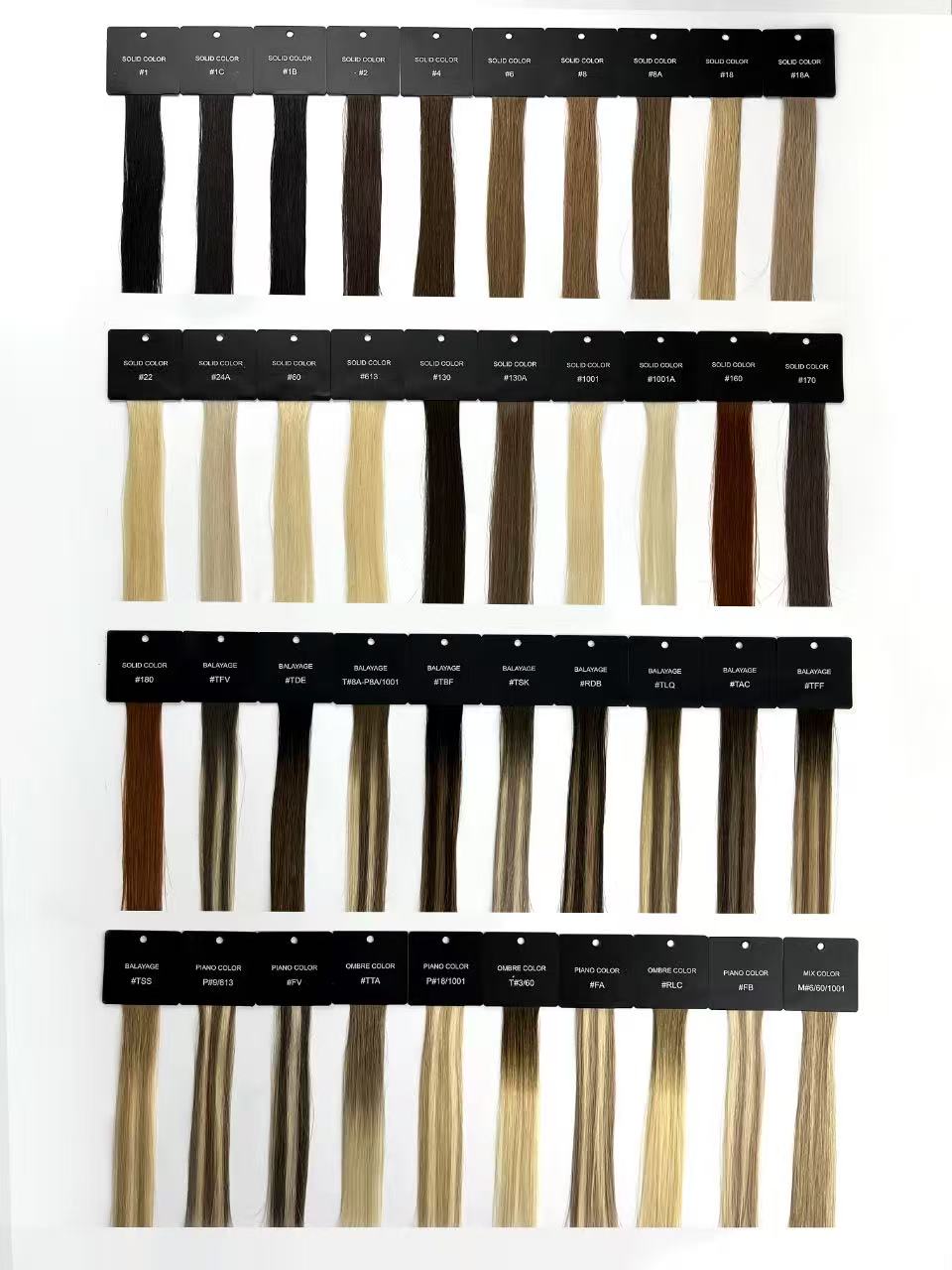
| Colour | Customized; extensive colour range, original created shade |
| Base | Ultra-thin, cuttable anywhere along the strip |
| Application | Glueless installation, no adhesive bond on the guest's own hair |
| Rated durability | 1.5–2 years |
| Typical uses | Salon installs, daily wear, alopecia, hair volume, party, wedding |
| Stock and service | Large consistent stock, extensive colour range, on-time shipment, responsive after-sale support |
Specifications as published by Dolas Dream for its salon professional genius weft hair extension.
Step-by-Step Breakdown: Evaluating a Genius Weft Before You Buy
Most salons evaluate a weft in the wrong order: price first, hair quality second. Working through these seven steps in sequence gives a clearer answer, and each step produces something you can ask a supplier to document.
- Confirm the donor model. Ask directly whether one weft equals one donor. If the answer is that hair is "Remy" but collected from several sources, you are comparing two different products. Single-donor construction is the origin of every other benefit in this article.
- Verify cuticle status and direction. The specification to look for is cuticle-intact hair with all cuticles aligned in one direction along the strip. Cuticle-intact means the layer has not been stripped and re-bonded; aligned means it is not fighting itself inside the weft.
- Inspect the base. Genius wefts sit in the 0.5–1.0 mm range at the base and are built without return hair. Run the weft between your fingers: a flexible base with no folded ridge is what allows a flat, comfortable install on fine hair.
- Test the cut. Ask whether the weft can be trimmed anywhere along its length without unraveling. If it can only be cut at marked points, sizing the weft to the guest's head becomes guesswork.
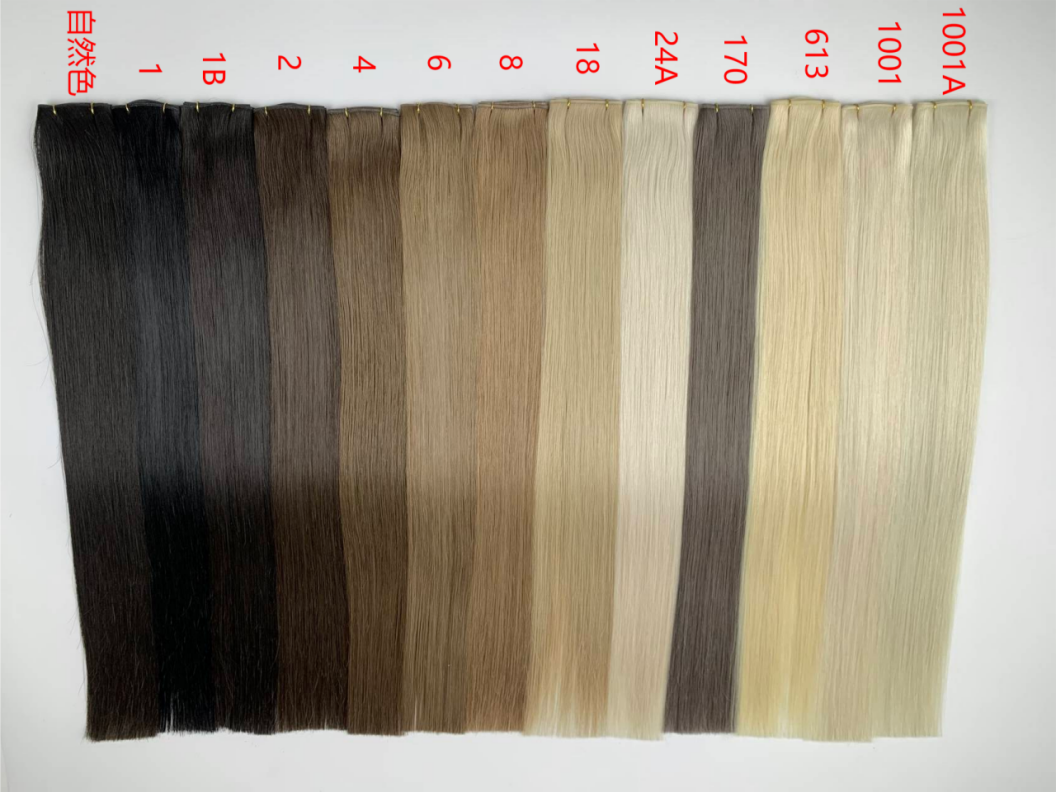
- Check the shade and length plan. Confirm the lengths you actually install most often and the colour range you need. Dolas Dream stocks 18, 20, 22 and 24 inch lengths with customized colour and an original created shade, which is what makes repeat colour matching possible across reorders.
- Confirm the application method. Genius wefts are installed gluelessly by stitching, with no adhesive applied to the guest's own hair. Confirm this with the supplier so your aftercare instructions and removal process match the product.
- Plan the lifecycle, not the appointment. Ask for the rated durability, then build the rebooking cycle around it. A weft rated at 1.5–2 years changes how you price a guest's first install, because the cost is spread across a longer service life.
Use Cases: Where a One-Donor Genius Weft Fits
Cuticle-aligned, single-donor wefts are not a universal answer, but they solve a specific set of salon situations more cleanly than mixed-donor alternatives.

- Fine hair that needs volume without bulk. The combination of a thin base and no return hair keeps the attachment line flat, which is the difference between a discreet install and a visible one on fine-haired guests.
- Hair loss and alopecia clients. Guests seeking density rather than dramatic length are the most sensitive to comfort at the scalp. Single-donor texture also matches the guest's remaining hair more closely.
- Colour work and creative services. Because the weft can be cut anywhere, it can be sized and placed around balayage, solid colour and curly finishes without unraveling at the trim line.
- Bridal, party and event work. Glueless installation shortens chair time, which matters when several guests are booked into the same day.
- Daily-wear clients who rebook on a cycle. Guests who wear extensions continuously are the ones who benefit most from slower wear and a longer replacement interval.
It is also worth knowing how the genius weft sits alongside the other methods a salon may already offer. Where a guest needs a strand-by-strand result, keratin-bonded options such as K tip hair extensions (20 inches, 100 g, cuticle intact virgin human hair, keratin heat application) and nano ring hair extensions (cuticle intact raw hair, 20–22 inch models, 100 strands per pack) serve a different brief. Where the guest needs coverage at the crown or parting rather than length, a silk base human hair topper (14 inch, 50–80 g, silk base with scalp mimic design, European hair) is the appropriate product, and salons serving observant clients may also stock a silk top Jewish wig (model DLD Kosher wig16, European virgin hair, 14 or 16 inch, silk base, 80–150 g). Each of these solves a different problem; the genius weft solves the volume-and-length brief with the least maintenance load.

Comparison Table: Genius Weft vs. Remy Hair From Multiple Donors
The clearest way to see the value of cuticle-aligned, single-donor construction is to set it beside the multi-donor remy option that many salons already stock. The comparison below reflects the two products as they are sourced and installed, not as they are advertised.
| Decision factor | Genius weft (cuticle-aligned, single donor) | Remy hair from multiple donors |
|---|---|---|
| Donor model | One donor per weft | Hair collected from several donors |
| Cuticle behaviour across the strip | Intact and aligned in one direction along the full length | Remy processing aligns cuticles, but different donors still mix textures and strand diameters across the weft |
| Base and bulk | Ultra-thin base, typically 0.5–1.0 mm, built without return hair | Usually built as a bulkier machine weft, thicker at the attachment line |
| Cutting and sizing | Cuttable anywhere along the strip without unraveling | Cutting is limited to designated points; the strip may unravel elsewhere |
| Application | Glueless: stitched, no adhesive on the guest's own hair | Method depends on construction; adhesive or tape methods are common |
| Routine maintenance | Approximately 90% less | Baseline |
| Usable lifespan | Extended by approximately 2× | Baseline |
| Initial cost per install | Approximately 10% higher | Lower |
| Total cost of ownership over 2 years | Approximately 30% lower | Baseline |
The pattern is consistent: the genius weft asks for slightly more money on day one and returns it through a longer service life and far fewer maintenance hours. For a salon, the maintenance hours are the real currency — an install that needs less detangling and fewer refits protects the calendar, which is the asset that actually generates revenue. Dolas Dream rates the durability of its genius weft at 1.5–2 years, which is the window over which that return is realised.
FAQ: Genius Weft Questions Salons Ask Before Sourcing
1. What documentation should a salon request from a genius weft supplier?
Compliance requirements depend on your market, but the request list is consistent. Ask for the material statement confirming cuticle-intact virgin remy human hair, the base construction and whether return hair is used, the rated durability, and your supplier's own quality-control process. Dolas Dream states that it follows international industry norms and that quality controllers check every single item before packing, and it ships from a 1,500 m² facility in Qingdao with a 90% export ratio, mainly to the USA and EU — figures you can verify against the supplier's own documentation before a first bulk order. If you also stock kosher wigs for observant clients, note that kosher certification requires rabbinical supervision and typically adds an estimated USD 15–30 per unit to factory gate prices, so it should be quoted separately from your genius weft pricing.
2. Can a genius weft be installed without glue, tape or heat bonding?
Yes. The glueless method is part of the construction rather than an add-on. Because the base is thin and free of folded return hair, the weft can be stitched into place and cut to the guest's head shape, with no adhesive applied to the guest's own hair at the attachment line and no heat-bonded tip created at the scalp. That keeps removal cleaner and makes reinstalling the same weft more straightforward — one reason the category is popular with salons handling fine hair and hair-loss clients.
3. Why does a genius weft cost more up front, and does it pay back?
Expect roughly 10% higher initial cost per install than remy hair from multiple donors. The payback sits in the maintenance cycle: a cuticle-aligned one-donor weft reduces routine maintenance by around 90% and extends usable lifespan by approximately 2×, which brings total cost of ownership to around 30% lower across a two-year period. Dolas Dream rates its genius weft at 1.5–2 years of durability, and 50 g per weft with customized length and colour, so the comparison can be run on your own install pricing rather than on a generic average.
4. Can we test a genius weft before placing a bulk order?
Salons sourcing for the first time should validate shade, weight and base feel before committing to volume. Dolas Dream stocks 18, 20, 22 and 24 inch lengths with customized colour and an original created shade — the same shade reference used across reorders — so a sample can be matched to the colours you actually install. Sample and quotation requests can be sent to [email protected] or made by phone on +8618863251821, and the full published range is in the Dolas Dream Initial Catalogue (PDF).
5. What lead time and stock position should a salon expect?
Genius weft supply is a stock question as much as a production one. Dolas Dream maintains a large consistent stock across its lengths and colour range, produces about 115,000 units per year from its Qingdao facility, and states that it can meet bulk orders in nominal time with on-time shipment and doorstep delivery. Because 90% of output is exported, mainly to the USA and EU, replenishment planning should be built around your own rebooking cycle rather than around a single large seasonal order. For current lead times and stock positions, contact the team at dolascrafts.com or via WhatsApp before your next reorder window.
Conclusion: What Genius Weft 101 Means for Your Salon
A genius weft is not a marketing tier above standard extensions. It is a specific construction: hair from one donor, cuticles intact and aligned in one direction, on an ultra-thin base with no return hair, cuttable anywhere and installed without glue. Every benefit salons care about — less tangling, faster installs, longer wear and lower cost of ownership over two years — traces back to those decisions rather than to the fibre alone.
If you are evaluating the category for the first time, run the seven-step checklist on your current supplier before you compare prices. Ask for the donor model, the cuticle status, the base thickness, the cut points, the application method and the rated durability. A supplier that can answer all six with documentation is a supplier worth a bulk order.
Next step for salon owners
Dolas Dream Hair Co., Ltd manufactures salon professional genius weft hair extensions in 18, 20, 22 and 24 inch lengths, 50 g per weft, in cuticle-intact virgin remy human hair with customized colour, alongside K tip and nano ring extensions and silk base human hair toppers.
Download the Dolas Dream Initial Catalogue (PDF), request a sample or quotation at [email protected], or message the team on WhatsApp. Current product guides and salon sourcing articles are published on the Dolas Dream blog.

Have Questions or Need More Details?
Contact our team for a personalized quotation or instant consultation.
Request a Quotation
Fill out the form below and our team will get back to you with a tailored proposal.
WhatsApp Direct Chat
Prefer to chat in real-time? Message us on WhatsApp for instant assistance & quick answers.
- Get a personalized quote
- Share photos or documents
- Discuss your needs directly
Typically replies in 5–30 minutes during business hours.