
The Technical Anatomy of Genius Weft: Cuticle Alignment and Installation
A Genius weft is a machine-tied strip of human hair whose cuticles all run in one direction and stay intact from a single donor — and that cuticle discipline, not the thickness of the track, is what determines how long the weft survives on a client. This technical guide is written for salon owners who have already chosen a supply direction and now need to execute: verifying source, choosing an installation method, and planning reorders against real production capacity and lead times.
Two production facts drive everything that follows. A Dolas Dream Genius weft delivers 100% cuticle-intact hair taken from one donor rather than blended from many, and that construction extends the usable lifespan by approximately 2 times compared with remy hair assembled from multiple donors. The glueless installation the weft allows is a structural outcome of aligned cuticles, not a styling preference. The sections below explain how each of those outcomes is engineered, and what they mean at the chair.
The Problem: Weft Failure Starts at the Cuticle, Not the Track
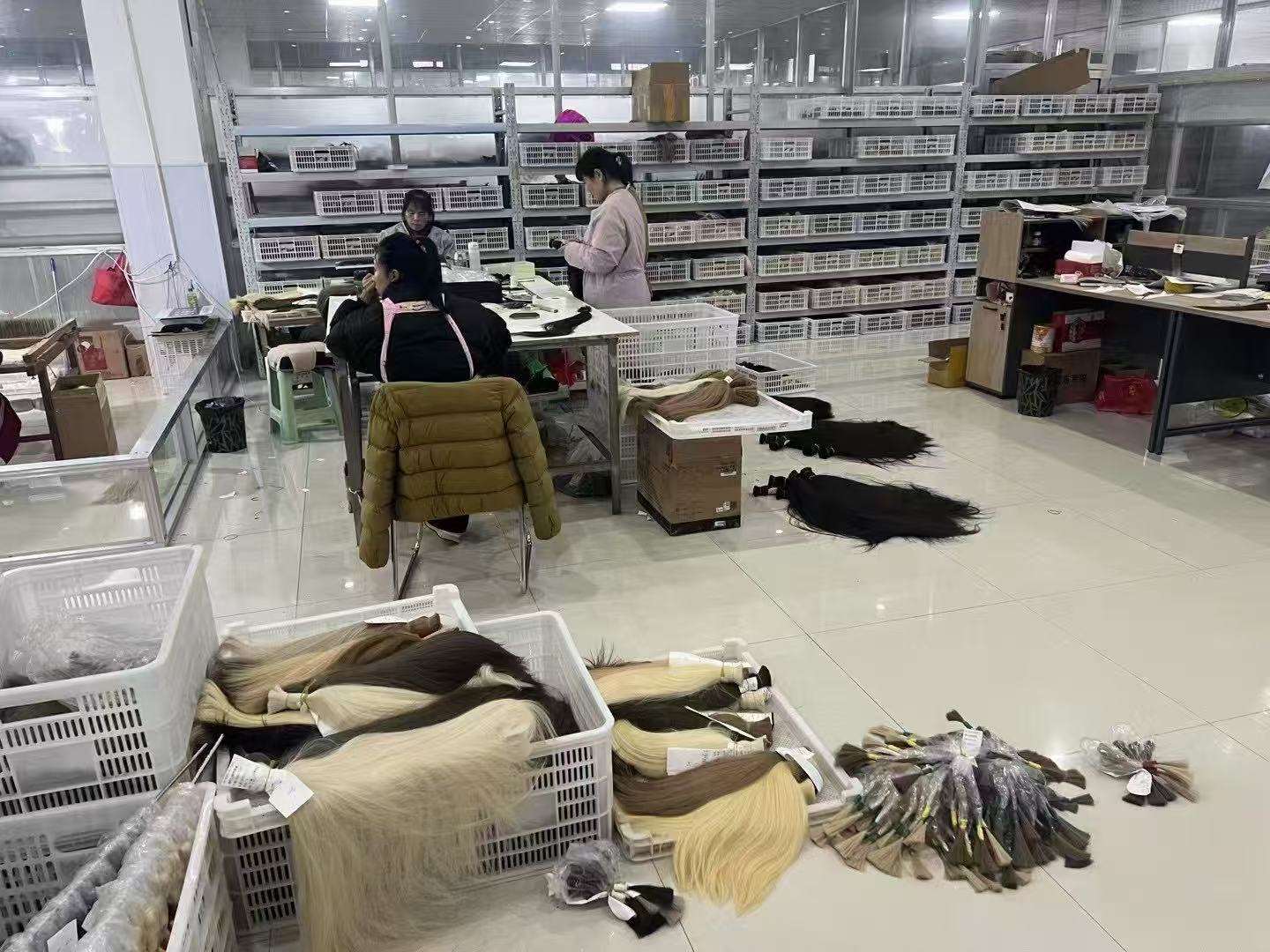
Human hair is covered in cuticle scales that overlap in a single direction, like roof tiles. When every strand in a weft points the same way, the scales glide over one another and the hair stays smooth. When strands run in opposing directions, the scales catch, abrade and lock together. In the salon this shows up as matting close to the scalp, tangling after the first wash, and shedding that begins long before the hair itself is worn out.
Remy hair collected from multiple donors cannot be directionally reconciled after the fact. The standard industrial answer is to strip the cuticle — a chemical removal of the outer layer — so the strand accepts a coating and feels smooth at hand-off. Stripping solves the tangling symptom by deleting the structure that produced shine, slip and friction resistance in the first place. The hair then depends on silicone and aftercare to keep that hand-feel, and it degrades faster under heat, brushing and daily wear.
Cuticle alignment removes the cause rather than the symptom. Keep the cuticle intact, keep it running in one direction, and keep each batch to a single donor so no opposing direction enters the weft at all. This is why the best genius weft hair extensions are not distinguished by the track alone — the track is only 0.8 mm to 0.9 mm of the story.
Industry Background: Where Genius Wefts Sit in the 2026 Market
Demand for cuticle-intact human hair has grown alongside the wider category. The global hair wigs and extensions market was valued at USD 15.2 billion in 2025 and is projected to reach USD 31.1 billion by 2033, according to Grand View Research. Human hair products held a 65.6% revenue share of that market in 2025, driven by styling versatility and natural appearance. A smaller but more demanding segment — medical wigs for alopecia and chemotherapy-induced hair loss — was valued at USD 618.05 million in 2024, according to Cognitive Market Research.
Manufacturing is concentrated in a few regions. China's wig clusters, notably Xuchang and Qingdao, produce over 12 million units annually as of 2024. Within that volume, Genius wefts occupy a specific technical position: the format is best described as a hybrid that combines the thinness associated with hand-tied wefts with the durability and machine consistency of machine-made wefts, and it can be cut anywhere along the track without shedding. Independent manufacturing standards cite a track thickness of roughly 0.8 mm to 0.9 mm, which is what allows the weft to sit flat against the scalp and stay hidden in fine hair.
The practical consequence for salons is that "Genius weft" describes a construction method, not a guaranteed quality level. Two wefts can share the same ultra-thin track and behave completely differently on a client, because one carries aligned cuticle from one donor while the other carries stripped hair gathered from mixed sources. Machine tied genius weft hair extensions and single-donor, cuticle-aligned wefts therefore have to be evaluated on two separate axes.
Inside the Cuticle-Aligned Genius Weft: How Dolas Dream Builds It
Dolas Dream Crafts Co., Ltd. is a Qingdao-based manufacturer of genius weft hair extensions and human hair toppers, founded in 2015 and exporting primarily to the USA and EU markets. The company operates a 1,500 m² facility with 50 employees, including 15 engineers in its R&D team, and an annual output of 115,000 units.
Single-Donor Raw Hair and 100% Cuticle Integrity
Cuticle alignment begins at sourcing, not at the sewing machine. The hair used in the Genius weft line is cuticle-aligned raw hair collected from a single donor, so every strand in the batch shares the same cuticle direction and the same natural texture. Because the material is never pooled across donors, there is no conflicting direction to reconcile and no reason to strip the outer layer. The result is 100% cuticle-intact hair from one donor, with a lifespan extended by 2 times against remy hair from multiple donors.
Single-donor sourcing also solves a matching problem that salons feel immediately. Strand thickness, texture and natural colour direction stay consistent through the length of the weft instead of shifting donor to donor, which makes blending and repeat orders far more predictable for virgin remy genius weft hair extensions supplied to hair salon owners.
Machine-Tied Construction and the Glueless Window
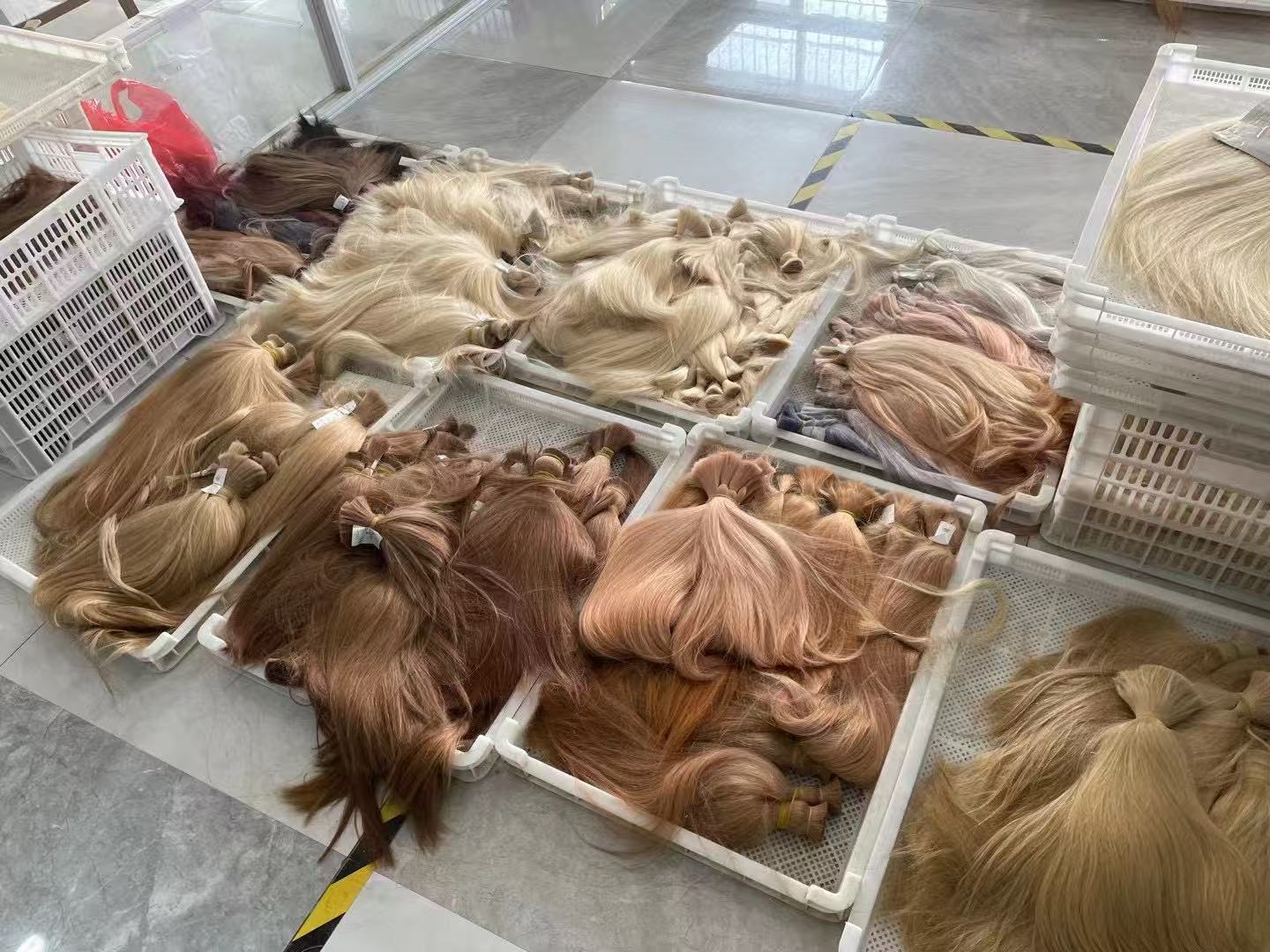
The Genius weft is a machine-tied construction built on an ultra-thin track, which is what makes a glueless installation possible. With no adhesive required at the track, application time drops and the weft can be positioned, adjusted and removed without the heat or solvent exposure that bonded methods require. Dolas Dream's published comparison data lists glueless application as one of the core differences between its Genius weft and standard remy hair from multiple donors, together with time-saving installation and 50% higher efficiency in service.
For the salon, the glueless window is a service-cost advantage as much as a comfort one. Every minute removed from install and removal is a minute returned to the appointment book.
Treatment Discipline: Keeping Processing Minimal
Because alignment is controlled at the sourcing stage, the cuticle-stripping step that multi-donor remy hair depends on becomes unnecessary. Dolas Dream summarises this in its own comparison data as freedom from the harmful processing that stripped hair requires. The technical point is straightforward: the outer layer of the strand is never removed, so there is no stripped surface waiting to be replaced with a coating.
Quality Control: Stopping Synthetic Fibre at Intake
One of the persistent quality risks in the virgin human hair trade is synthetic fibre entering the raw material stream. Dolas Dream controls it at the earliest possible point — inspection from raw material, real-time hair material inspection during intake, and regular hand-picking through the hair to remove any synthetic strands before production begins. The acceptance criterion for finished orders is a pre-shipment test.
Capacity and Order Infrastructure Behind the Weft
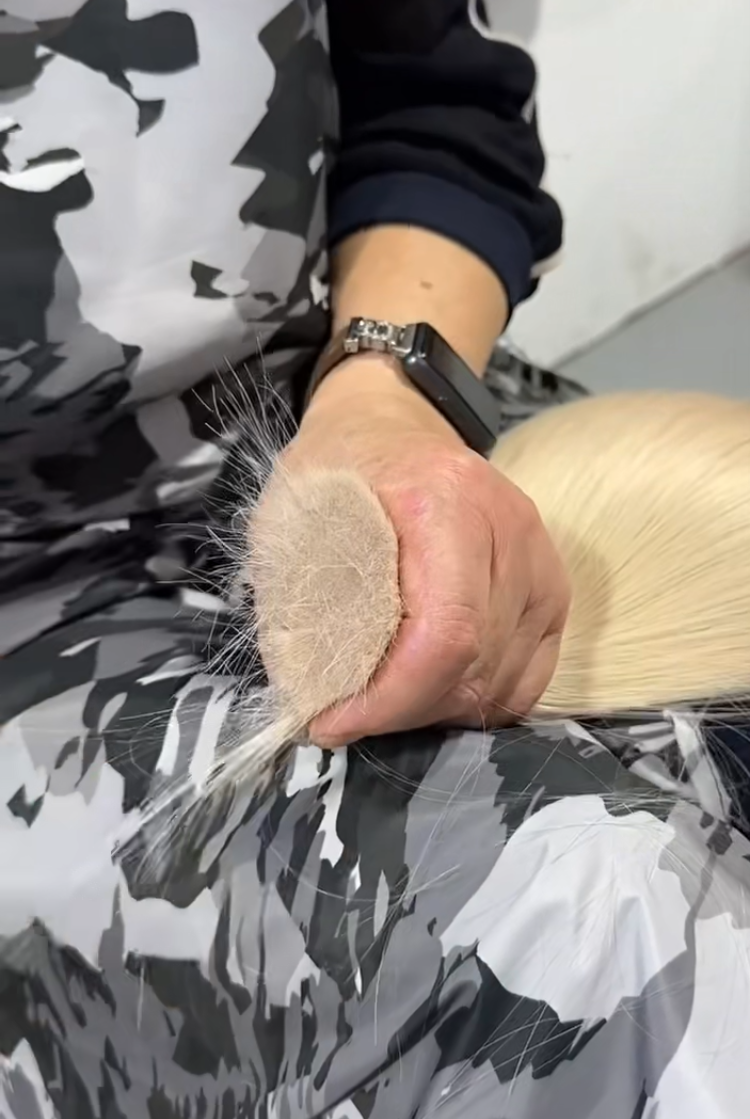
Cuticle quality only matters if it can be delivered on schedule. Dolas Dream runs a monthly production capacity of 12,000 units, with a typical production lead time of 2–3 days for inventory hair and 7–15 days for customised hair. The minimum order quantity is 2 units, delivery terms are FOB Qingdao, payment is accepted by T/T in advance, PayPal or Western Union, and acceptance is confirmed by pre-shipment test.
Step-by-Step: From Raw Hair Intake to Salon-Ready Genius Weft
- Single-donor intake. Raw hair is received and inspected in real time, then hand-picked to remove any synthetic strands. Batch identity is preserved so that one donor's hair is not pooled with another's.
- Cuticle verification and directional sorting. Strands are checked for intact cuticle and sorted so that every hair runs in the same direction. This step is what makes the finished weft 100% cuticle intact.
- Machine-tied weft construction. The aligned hair is built into a Genius weft on an ultra-thin track of approximately 0.8–0.9 mm, producing a flat, cuttable track that holds without adhesive.
- Minimal finishing. No cuticle-stripping is required, so the strand keeps the layer that provides shine and friction resistance.
- Inspection and pre-shipment test. Finished goods are checked against the agreed acceptance criteria before they leave the facility.
- Order handling and dispatch. Inventory hair ships in 2–3 days; customised hair ships in 7–15 days, under FOB Qingdao terms with a 2-unit minimum order.
Installation Anatomy: Why Cuticle Alignment Changes Application
Aligned cuticle does not only extend lifespan; it changes what an installer can do in the chair. Because the strands slide instead of gripping, a cuticle-intact weft requires 90% less maintenance than its multi-donor equivalent, delivers 50% higher efficiency in service, and stays reusable across removals and refits. It suits daily wear as well as weddings, parties, holidays and dating appointments, and it holds up in the salon service cycle.
Genius Wefts and Machine-Tied Formats
Machine-tied Genius wefts are the highest-volume format for salons that need even density along the track and the ability to cut the weft to fit a section without shedding at the cut edge. This is the format Dolas Dream manufactures under the Genius weft line, and it is the one most directly affected by cuticle alignment: the thinner and flatter the track, the more visible a tangling failure becomes.
K Tip Hair Extensions
K tip hair extensions are strand-based systems in which small sections of hair are bonded into individual tips and attached point by point. As a general industry principle, strand-based methods place higher stress on each individual bundle than a weft does, because every attachment point carries load independently. Aligned cuticle reduces the internal friction inside each tip, which is why cuticle integrity matters more — not less — in strand-based work.
Nano Ring Hair Extensions
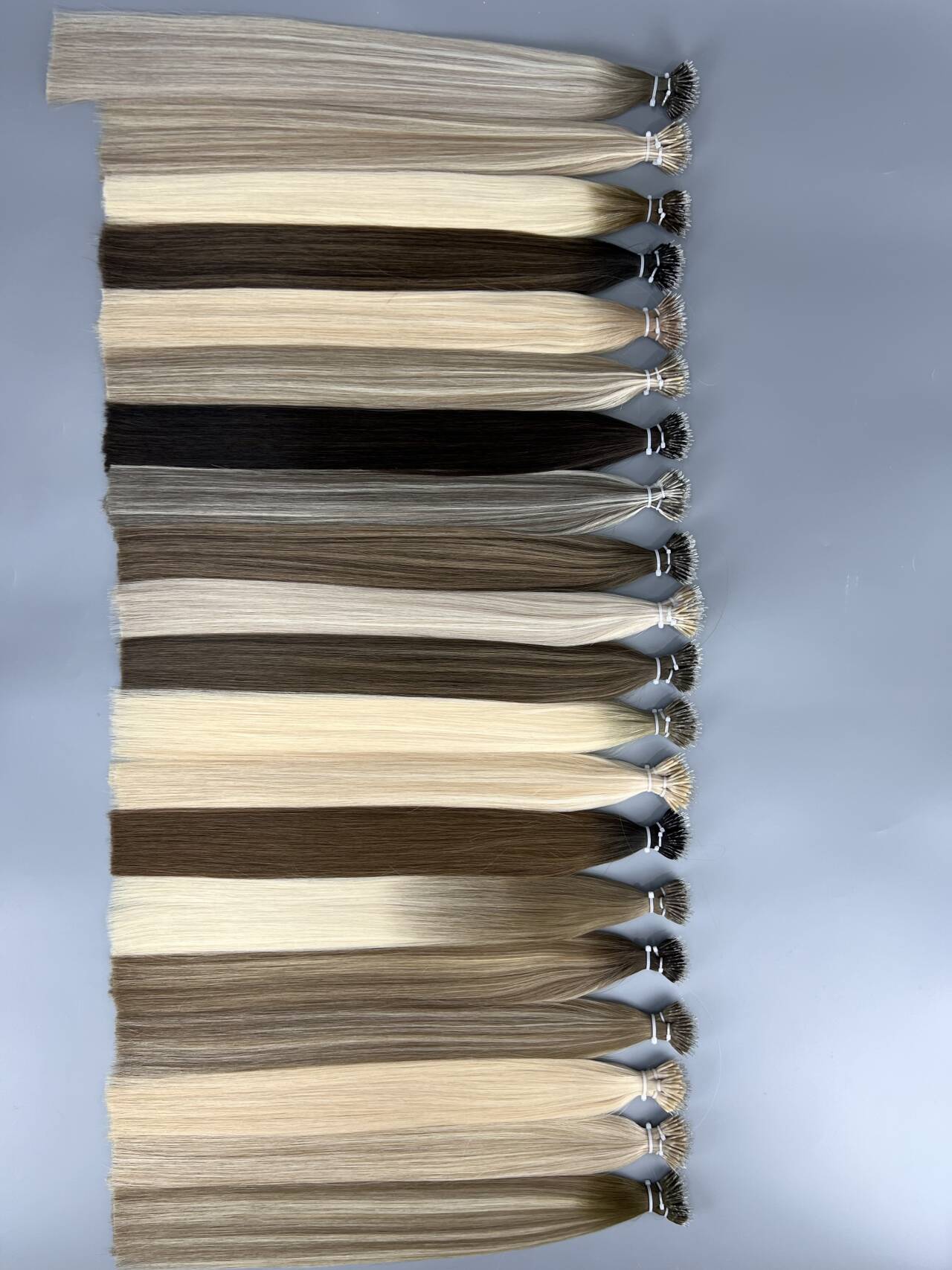
Nano ring hair extensions use small rings to clamp the client's own hair together with the extension strand, with no heat and no adhesive. The mechanical grip of a nano ring depends on the strand staying smooth and compressible, which is exactly the property that a stripped cuticle destroys. A cuticle-intact strand holds its shape inside the ring, so the attachment stays secure for longer without over-tightening.
Silk Base Human Hair Toppers and Silk Top Jewish Wigs for White Women
Toppers and wigs sit in the same sourcing logic but a different compliance frame. A silk base human hair topper is chosen by salon owners for the same reason a weft is: the hair behaves naturally against the client's own. For clients with thinning hair or medical hair loss, this is where cuticle-intact construction is least negotiable, in a medical wigs segment valued at USD 618.05 million in 2024. Salons supplying Jewish clients face one additional layer: kosher certification for wigs (Sheitels) requires verification that the hair is not sourced from idolatrous rituals, such as certain Hindu temple offerings. Wholesale kosher wigs for salons should therefore be assessed on documented provenance of the raw hair — not only on the finished product. Dolas Dream's own range is centred on genius wefts and human hair toppers, built from cuticle-aligned virgin raw hair held to the same single-donor discipline.
Use Cases: Where a Cuticle-Aligned Weft Earns Its Place
- Daily-wear clients. The format is built for repeat wear, where maintenance load and lifespan matter more than the first-week hand-feel.
- Bridal and event work. Weddings, parties, holidays and dating appointments need a weft that stays smooth through styling, heat and a long day.
- Fine hair and hair-loss clients. A flat track of roughly 0.8–0.9 mm sits closer to the scalp, and a topper covers thinning areas without a full wig.
- Salon efficiency. Glueless application and 50% higher service efficiency change the economics of high-volume extension appointments.
- Colour and texture matching. Single-donor batches reduce the variability that forces salons to order extra units to find a match.
- Wholesale and resale. Distributors and salon groups need a consistent repeat SKU, which is why a documented raw-material standard matters more than a one-off sample.
Comparison Table: Cuticle-Aligned Genius Weft vs Standard Remy from Multiple Donors
| Decision metric | Cuticle-aligned Genius weft (Dolas Dream) | Standard remy hair from multiple donors |
|---|---|---|
| Hair source | Cuticle-aligned raw hair from one donor | Hair pooled from multiple donors |
| Cuticle condition | 100% cuticle-intact hair | Cuticle stripped or mixed direction |
| Installation method | Glueless, time-saving installation | Depends on adhesive or bonding |
| Processing exposure | Minimal treatment; cuticle not removed | Processing required to control tangling |
| Service lifespan | Lifespan extended by 2 times | Baseline |
| Maintenance load | 90% less maintenance required | Baseline |
| Service efficiency | 50% higher efficiency; reusable, long life span | Baseline |
| Initial cost | 10% higher | Baseline |
| Total cost of ownership over 2 years | 30% lower | Baseline |
| Best suited to | Daily wear, wedding, parties, holidays, dating, hair salon | Short-cycle or single-event use |
Frequently Asked Questions
How can a salon verify that a Genius weft is 100% cuticle-intact human hair and not blended with synthetic fibre?
Verification is a raw-material process, not a finished-goods claim. Dolas Dream inspects from the raw material stage, runs real-time hair material inspection during intake, and hand-picks regularly through the hair to remove synthetic strands before production begins. The acceptance criterion on finished orders is a pre-shipment test, so the batch is confirmed against the agreed standard before it ships.
What production capacity and factory capability stands behind Dolas Dream Genius wefts?
Dolas Dream Crafts Co., Ltd. manufactures in Qingdao with a 1,500 m² facility, a team of 50 employees and 15 engineers in R&D. Monthly production capacity is 12,000 units and annual output is 115,000 units, with 90% of production exported, primarily to the USA and EU. Main product lines are genius weft hair extensions and human hair toppers.
How much more does a cuticle-aligned weft cost, and how does that change total cost of ownership?
The initial cost of a cuticle-aligned Genius weft is about 10% higher than standard remy hair from multiple donors. Over a two-year ownership window the position reverses: total cost of ownership is 30% lower, because the weft requires 90% less maintenance, extends lifespan by 2 times and is reusable, delivering 50% higher efficiency in salon service.
Can I test a Genius weft before committing to a wholesale order?
Yes. The minimum order quantity is 2 units, which allows a salon to evaluate strand alignment, track behaviour and finish before scaling. Payment terms are T/T in advance, PayPal or Western Union, delivery terms are FOB Qingdao, and every order is released against a pre-shipment test as the acceptance criterion.
What lead times should a salon plan for on inventory versus custom orders?
Monthly production capacity is 12,000 units, with a typical production lead time of 2–3 days for inventory hair and 7–15 days for customised hair. Salons running a scheduled client calendar should therefore plan standard shades against the 2–3 day window and treat custom length, colour or texture requests as a 7–15 day item. To review the full range and specifications, the Dolas Dream catalogue can be downloaded from the link at the end of this article.
Conclusion: Cuticle Alignment as a Long-Term Supply Decision
The anatomy of a Genius weft comes down to decisions made long before installation. Single-donor sourcing keeps cuticle direction consistent. Keeping the cuticle intact preserves the shine, slip and friction resistance that stripped hair has to replace with coatings. Machine-tied construction on an ultra-thin track then turns those sourcing decisions into a glueless, cuttable weft that installs faster, needs 90% less maintenance, lasts twice as long and costs 30% less to own across two years.
For salons and distributors, the more important question is not which weft is cheapest on the first invoice but whether the same standard can be repeated on every reorder. That is a capacity and process question: 12,000 units per month, 2–3 day lead times on inventory, 7–15 days on custom work, a 2-unit minimum order and a pre-shipment test on every batch. A supplier that can hold those numbers while keeping cuticle alignment intact is a supply chain, not a transaction.
Next Step: Sample, Quote or Catalogue
Dolas Dream Crafts Co., Ltd. supplies cuticle-aligned genius weft hair extensions and human hair toppers to salons, distributors and wholesale buyers in the USA and EU. Request a sample or a quote, or download the full product catalogue to review specifications before ordering.
Catalogue:Download the Dolas Dream Initial Catalogue (PDF)
Email:[email protected]
WhatsApp:+86 188 6325 1821
Website:www.dolascrafts.com
Have Questions or Need More Details?
Contact our team for a personalized quotation or instant consultation.
Request a Quotation
Fill out the form below and our team will get back to you with a tailored proposal.
WhatsApp Direct Chat
Prefer to chat in real-time? Message us on WhatsApp for instant assistance & quick answers.
- Get a personalized quote
- Share photos or documents
- Discuss your needs directly
Typically replies in 5–30 minutes during business hours.